
Arjuna, the Disciple in the Bhagavad Gita

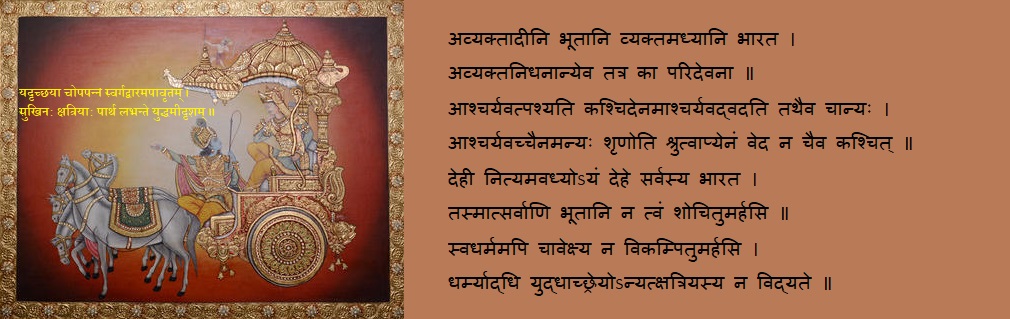
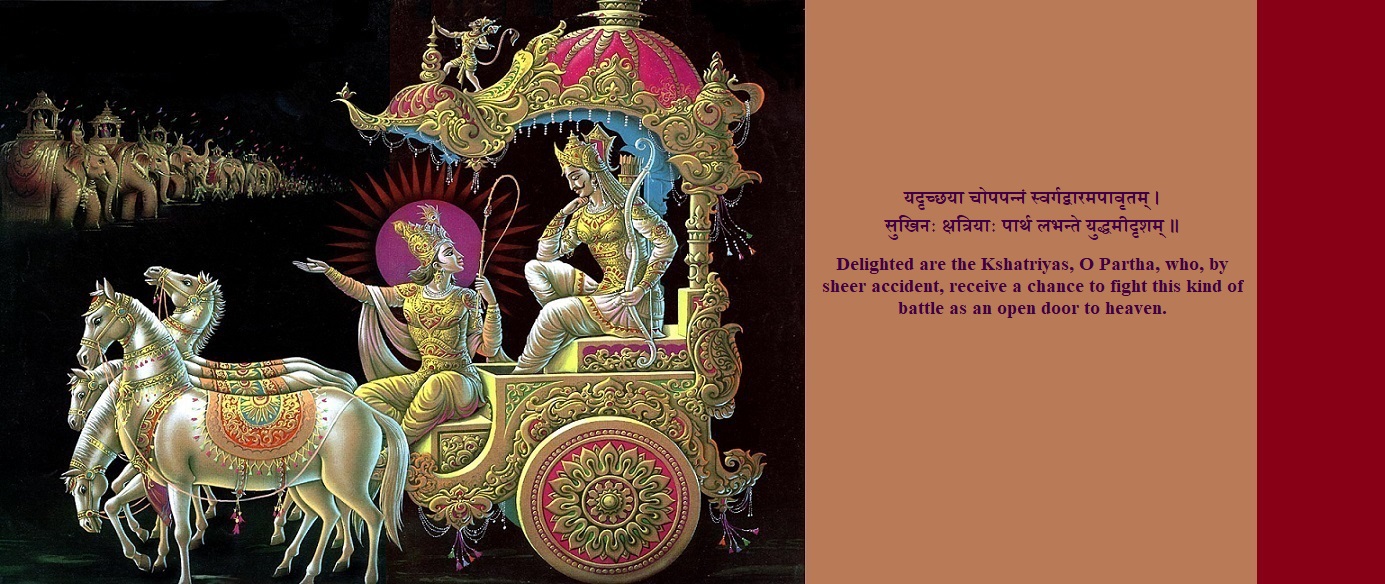
Gita Post #15  The assessment we make here of Arjuna may sound non-standard compared to the centuries old common beliefs. This will not affect in any way the Yoga Śāstra we learn. Rather, a logical assessment makes our Gita lessons much smoother. In an episode of the Mahābhārata, Sage Vyāsa himself attests to the veracity of our judgment. 
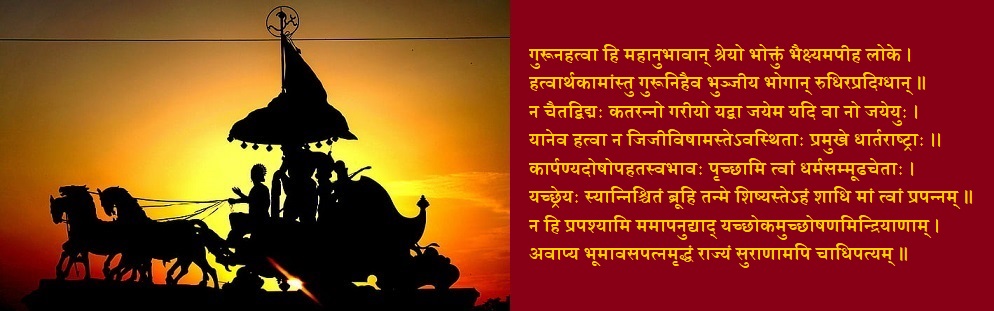
The Bhagavad Gita, Chapter 2, Verses 5 ... 8

Gita Post #14  Arjuna has a sense, though not obvious yet, that there is something which ends all sufferings and brings perfect peace and happiness in life. That 'something' and the means to achieve the same seem much higher in value than all the power, wealth, fame and the pleasures of this world he could win; this recognition is a vital step for anyone who embarks on the spiritual journey. He implores Bhagavān Kṛshto save him by teaching the way to attain what is of supreme merit.

The Bhagavad Gita, Chapter 2, Verses 1 ... 4

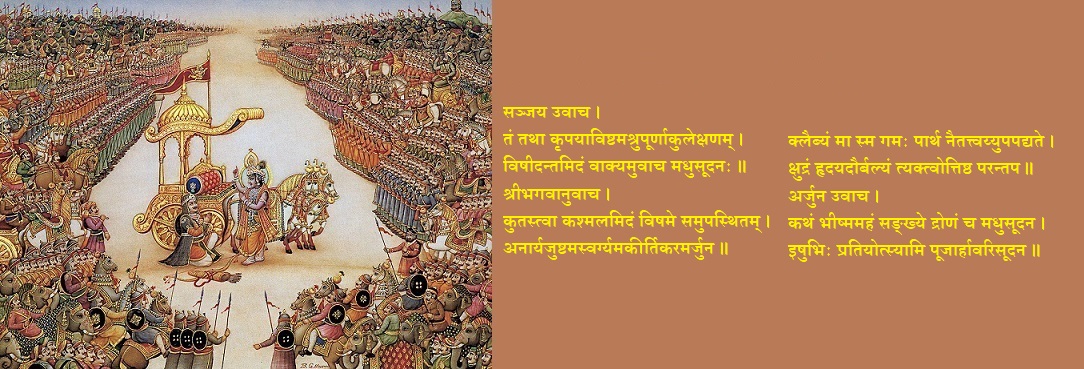
Gita Post #13  From the point of view of Vedanta, Arjuna represents the individual (vyashṭi); the two armies of four million soldiers he surveys from the centre of the battlefield represent the world (samashṭi); and the unarmed Kṛsha is the Absolute (Brahman) staying in the neutral position as a witness (sākshi). The study of Sāṅkhya Yoga, Chapter 2 of the Bhagavad Gita, begins.

Pages